
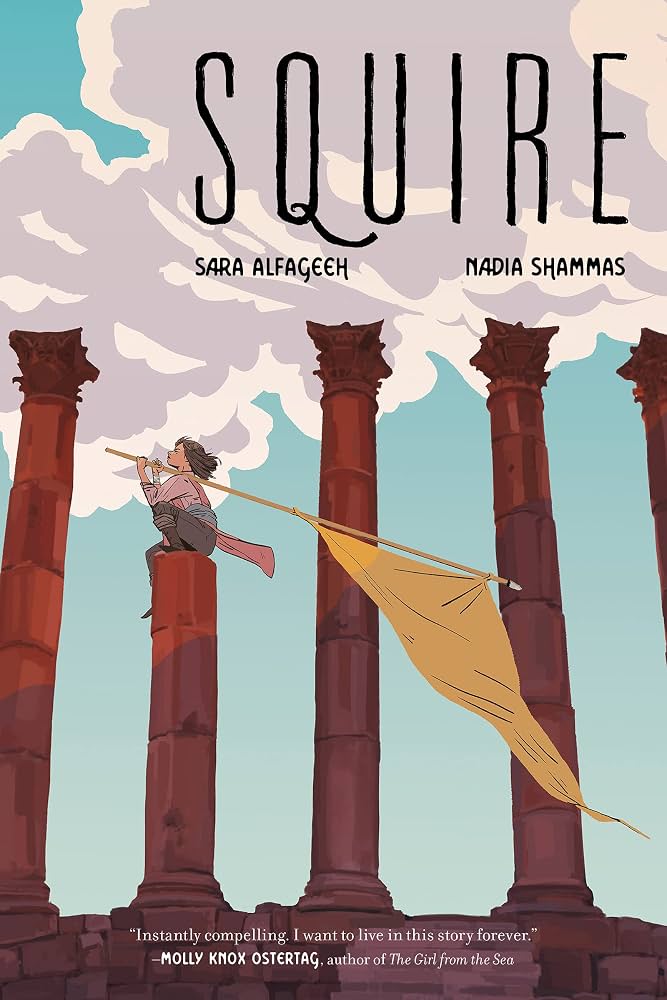
It is impossible to define a well-written book by its length, because the shortest books have to pack the most meaning into the fewest number of words. Graphic novels embody the ideal that more can is said with less. They can illustrate a world with vibrant colors, but the narrative is limited by the number of space available for text. An enjoyable graphic novel bridges the gaps created by a limited point of view by using visuals to enhance details. Though this type of book lacks validity in the world of higher education, I have found them to be an enjoyable way of consuming literature in my free time. This month, I overjoyed reading ‘Squire’ by Nadia Shamas and Sara Alfageeh.
The book follows Azia, a girl who was born an Ornu citizen who wishes to move out of the slums and into the squire-hood. Given the opportunity on her 14th birthday, she leaves home and enters the training corps to become a knight. The training itself is grueling but having to hide her identity as part of the Ornu people proves to be one of the most challenging things yet. The Ornu are an ostracized minority group and are explicitly prohibited from becoming a part of the army. In a war-torn country faced with famine and discrimination, Azia must secure a future for both her family and her through her training and lessons provided by the empire of Bayt-Sajji.
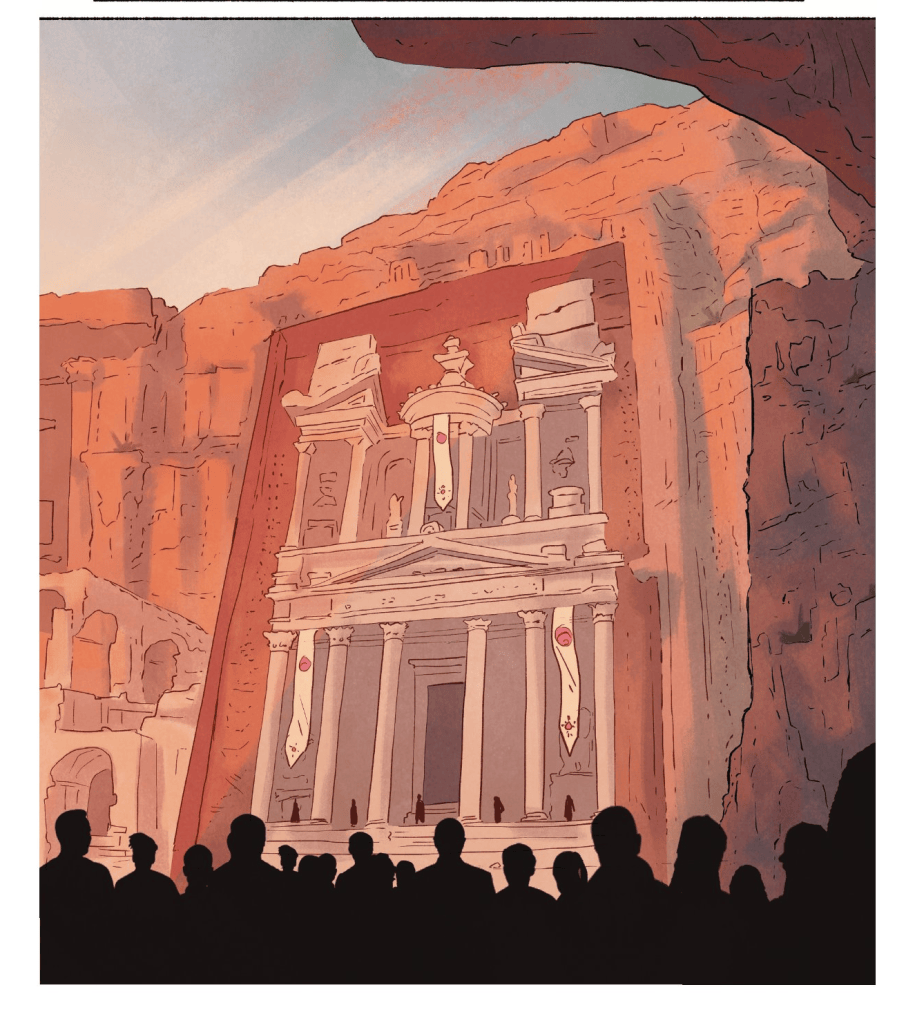
The question that Squire proposes to the audience is a stark contrast to the original tone presented through Azia’s youthful whimsy. She begins the story with excitement and determination, but her positive attitude is shattered by the narrative that empire creates surrounding the Ornu people. Rousing the desire to fight is difficult when history paints you as the villain rather than one of the heroes. Both their classes and Azia’s friends are open about their disdain for the Ornu people, going as far as hiring her people to commit crimes and fulfill their predetermined role of villains.
Squire struck me because the story is a critical example of the intersection between oppression and societal systems enforced by a governing body on people in a minority race. There are many dialogues that can be backed by critical race theory and the analysis of characters who suffer and the prosecutor of their suffering. Many of the texts that I read prior to Squire had similar messages, but this text was best at giving a good example at a more accessible reading level. It can be difficult to dilute such hard topics like racism and war, but Nadia Shamas and Sara Alfageeh do an amazing job at creating a story that strikes the heart of their audience and makes them come face-to-face with the realization that Azia’s world is merely a reflection of their own.
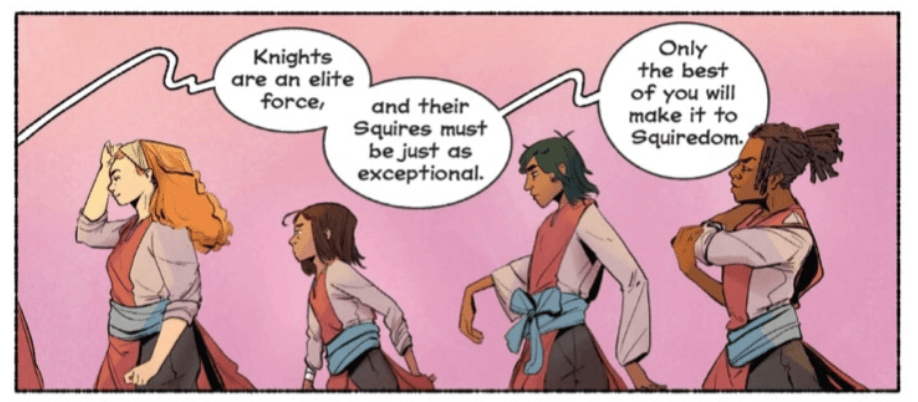
We see throughout Squire that one of the biggest oppositions to peace and change for the Ornu people is the government. It’s first displayed as a retaliation against the Ornu people that started the fighting, but as the story progresses, Aiza begins to uncover the cracks in the story that’s been weaved together. During a critical battle in the story Aiza must choose to fight against her own people or defend the very nation that has been prosecuting her. It is at this point that she makes the choice to stand by Bayt-Sajji and defend against the attacking Ornu people. The reason I chose this moment to highlight is because it’s the moment Aiza is actively defending her choice because it is all she has known. However, after the battle it comes to light that she is an Ornu and the people that she had defended began to turn against her. There is a distinct shift in their attitudes towards her, and the only thing that had truly changed was their perception of her race.
Bayt-Sajji is an empire with varying levels of discrimination based on a person’s race, their familial ties, and occupations. Though Aiza acts as a figurehead in the story, she is not the only one who faces some level of backlash based on their background and abilities. Her mentor Doruk was a fallen knight who had seen the fires of war and now lived a life of shame as he had lost a hand. His role in the first war allowed him insight into the atrocities that were being committed and disenchanted by the story of their government. Through his guidance, Aiza for the first time sees that the world she knows is a setup that’s meant to keep her people away from gaining freedom and liberation from the oppression that they’ve been facing.
The story of Squire shows the anger and grief that leads a society to reaching a tipping point where they must address the issues their system has created. The art works in tandem with the limited dialogue to show how people who are unaware can begin addressing an issue that was handed down to them. This is an important reminder to the populace that despite the starting point, change is a possibility even if it is required to come face-to-face with challenges. Aiza is the pinnacle of strength and an accurate representation of how people from difficult backgrounds can achieve things that were being kept away. Squire will remain a staple in my library for years to come and will be a top recommendation for anyone who is seeking change and has the drive to become more than what society wants them to be.



Leave a Reply