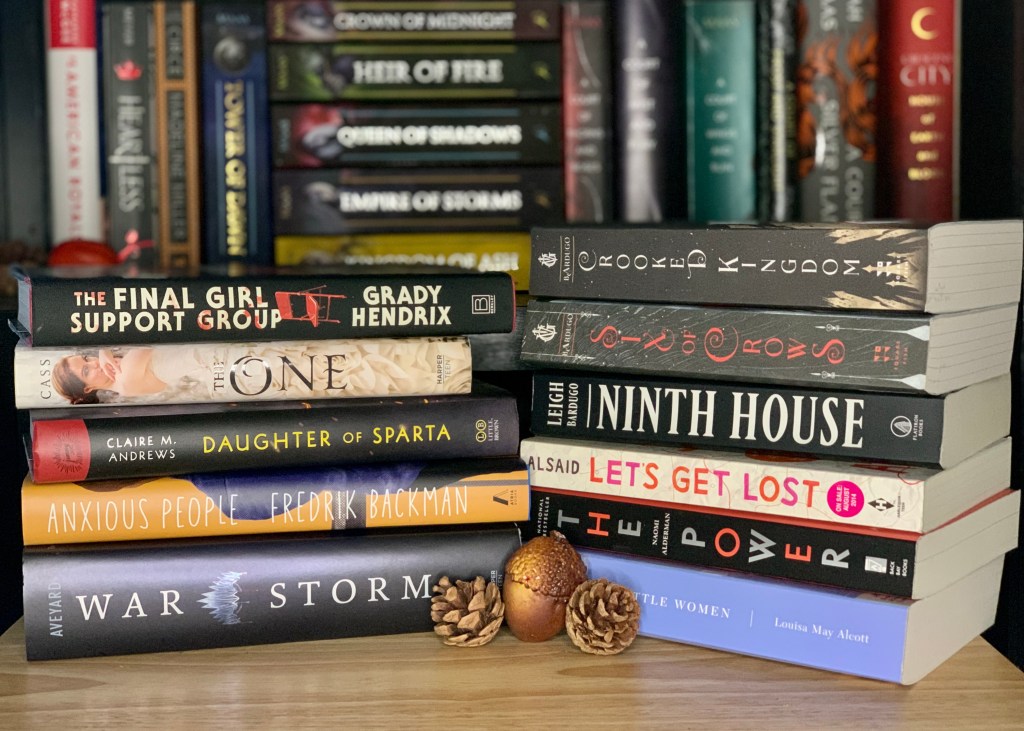
Like pizza, books come in many different shapes and sizes.
Over time, books have gone through a whole evolution of printing and publishing. What was once written on cave walls and stone tablets is now distributed en masse on smart devices using some sort of binary code. How did this happen?
The first printed book was created in China in 868 AD using a “woodblock printing” technique[1]. This technique is similar to a stamp in which the writing is carved out of a woodblock, the woodblock gets covered in black ink, and then the woodblock is stamped onto paper. Woodblock printing led to the “moveable type” technique which then led to the printing press, thus creating the printing revolution in 1490-1500 AD. All of these processes led up to the types of books we know today: the modern book.
As I said before, the modern comes in many different shapes and sizes; specifically, different formats. Let’s talk about these different kinds of books and take a closer look at book resources available to us today that you may not have heard of before.
Printed Books

I’m sure you already know what a book looks like (I’d be very, very concerned if you didn’t). There are two different forms of printed books: hardcover and paperback. Hardcover books are made with a hard backing and the pages are usually sewn together to bind them. Paperback books are exactly what they sound like: the covers are made with cardstock-like paper, but instead of the pages being sewn together, they are actually bound together by glue. Because of this, paperback books are the cheaper option and are the most common form of printed books, coming in the most variety: trade, mass-market, etc.
You can find printed books at major sellers like Amazon or Barnes & Noble, but printed books are also seen at your local grocery stores. However, bookstores have slowly disappeared over the last couple decades. There are about 15 bookstores in San Antonio, Texas and, out of those, only one of them is located in the Southern half of San Antonio. Now, I won’t get into the whole geographical disparity and politics of San Antonio, but as a reader it kind of sucks to have to drive 30 mins to get to the nearest Barnes & Noble. Could this be the cause of the rise of the e-book?
Another point of topic is the price of books; new books can cost you quite the penny. A recent trip to Barnes & Noble had me paying about $75 on 3 new hardcover books. With these kinds of prices, lots of people have been deterred from buying books, which then causes the rise in popularity of thrift book sellers.
Thrifted Books
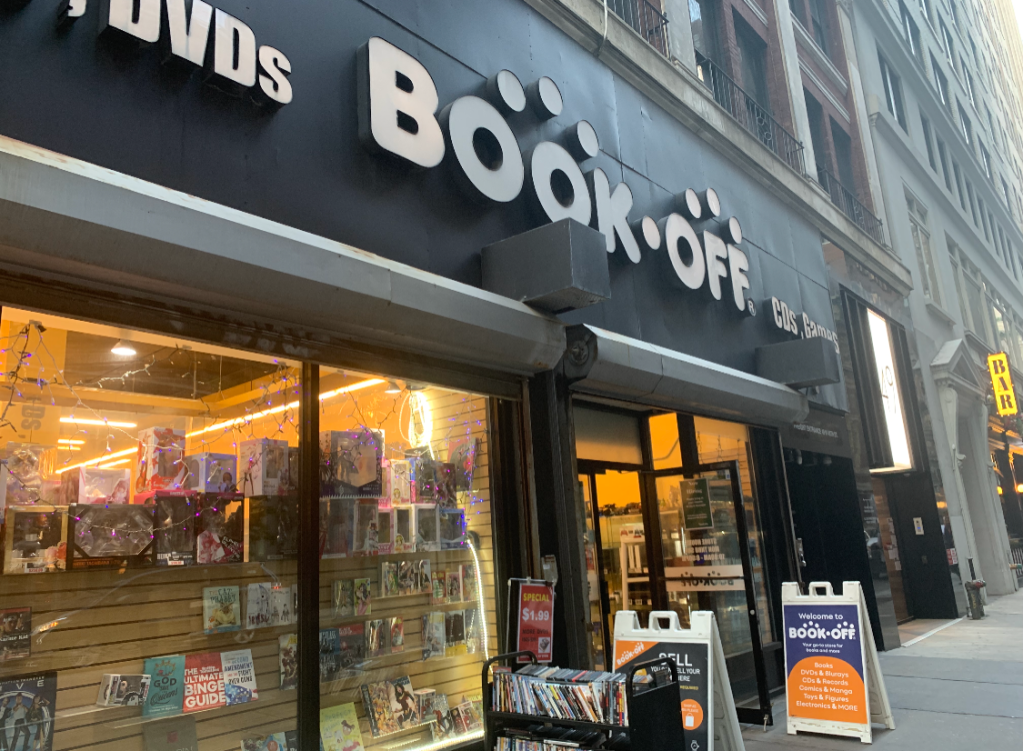
With traditional, new hardcovers costing about $18-$21 dollars from stores like Barnes & Noble or Amazon, thrifting books has become a big trend. The biggest thrift book chain is definitely Half Price Books, with over 120 locations in the United States. If you’ve never walked into a Half Price Books before, it is like walking into any indie bookstore where the store has a dated feeling to is. The store is divided into categories and genres, and the books are sorted by authors’ last names (as books should be sorted, I won’t take criticism from anyone on this matter). They also sell new books as well, but most of their market is catered to selling used books that people sell to the store.
There are also many websites like Book Outlet and Thriftbooks that are dedicated just to selling thrifted books. These sites are perfect who people want to bulk buy a bunch of books for dirt cheap. However, thrift stores like these might not have any of the new, current bestselling titles, so you might not see every single book you’ve been dying to read on these sites, but they are very useful for getting books at lower costs.
However, the cheapest formats of books are the ones that are completely digital: e-books and audiobooks.
Audiobooks
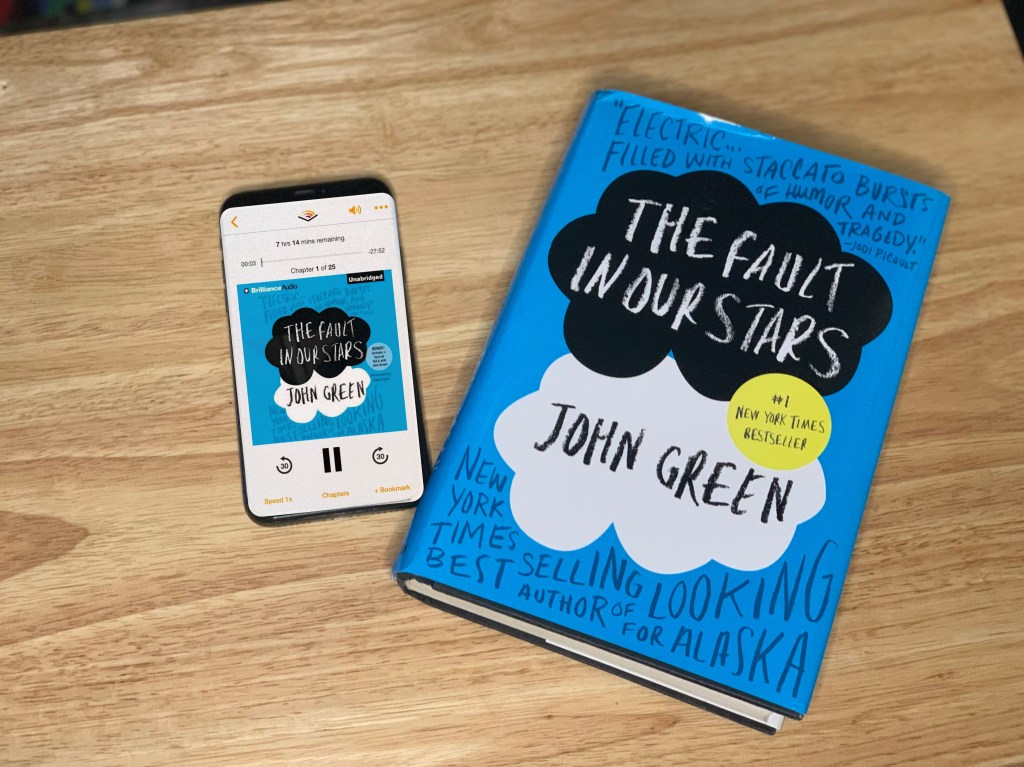
Like thrifting, podcasts have become a popular form of media for a large audience of people who love auditory content. If you like listening to podcasts during your morning drive to work, then you’ll probably love audiobooks. Audiobooks are perfect for people who love to read and for people who hate the act of reading.
Audiobooks are an amazing way to get into a novel if you are in situations where physically reading may be hard to do like driving, cooking, or doing chores. Audiobooks are narrated by professional voice actors that work to encapsulate the tone of the book and its narrator through use of voice. The demand for audiobooks has greatly increased over the years, leading to better production quality such as the addition of music and sound effects.
The most popular audiobook service is Audible, but you can access audiobooks from other places that sell books like Kindle or Barnes & Noble, and download them onto your phone. You can even find some audiobooks on YouTube or Spotify.
E-books

As far back as the1930s, many people thought that the future of books would be completely digital. I mean, it makes sense: e-books would save paper and other manufacturing costs, plus the world was turning digital very fast anyways. However, it wasn’t until Amazon’s launch of the Kindle in 2007 that really kicked off the era of the e-reader. The most popular e-readers of today are the Kindle, Nook, or Kobo, but actual e-reader use is not as popular as what people in the 1930s had hoped they would be.
Instead e-apps and e-libraries are way more popular than actual e-readers because e-books are more accessible on devices we may already have like tablets and phones. For instance, you can download the Kindle app on your iPhone and read books on your phone instead of having to buy a whole new device that is only dedicated to reading. You can also buy books through Apple Books and read them on the app on your iPhone. These apps save you the cost of an e-reader and e-books are waaaay cheaper than printed books, oftentimes going on sale for a dollar (yes, even the NYT Bestsellers). Kindle even has a subscription called Kindle Unlimited that gives you access to over a million e-books for only $9.99 a month.
Even better, you can read books for FREE using an e-library app, such as Cloud Library, which gives you access to free e-books and audiobooks through your public library. The app works just like a library, meaning you only have a certain amount of time to check out an e-book and will need to put a book on hold if it is already being read by someone else. And you do need a public library card to access it.
Public Libraries

Yes, public libraries still do exist and, yes, you should be taking full advantage of them! Maybe you don’t like reading on your phone and like the feel of an actual book in your hand, but don’t want to waste money on books. Renting books is amazing because, a) it gives you a time frame to return it by which might motivate you to read more, b) your shelves are not cluttered with millions of books you’ve already read, c) if you don’t like a book, you won’t feel bad about it because you didn’t waste any money on it, and, oh yeah, d) it’s completely FREE!
Public libraries do offer more than just books. Libraries have access to many different databases, language learning services, and even ancestry services (you can find out if you’re related to a celebrity!). If you don’t have one already, I suggest registering for a library card from your public library. It is easy and completely free (FREE!). You don’t even have to use it a lot. I have one, but I only use it for my Cloud Library app on my phone. If you don’t like reading on your phone, it is so easy these days to place an order for books online and use curbside pickup/dropoff to rent books, if your library offers it (San Antonio Public Libraries started offering this service due to the pandemic). No fuss, just a quick exchange.
But what if you don’t want to just rent books? What if you want to completely own books for the cheapest possible option: for free?
Free Books
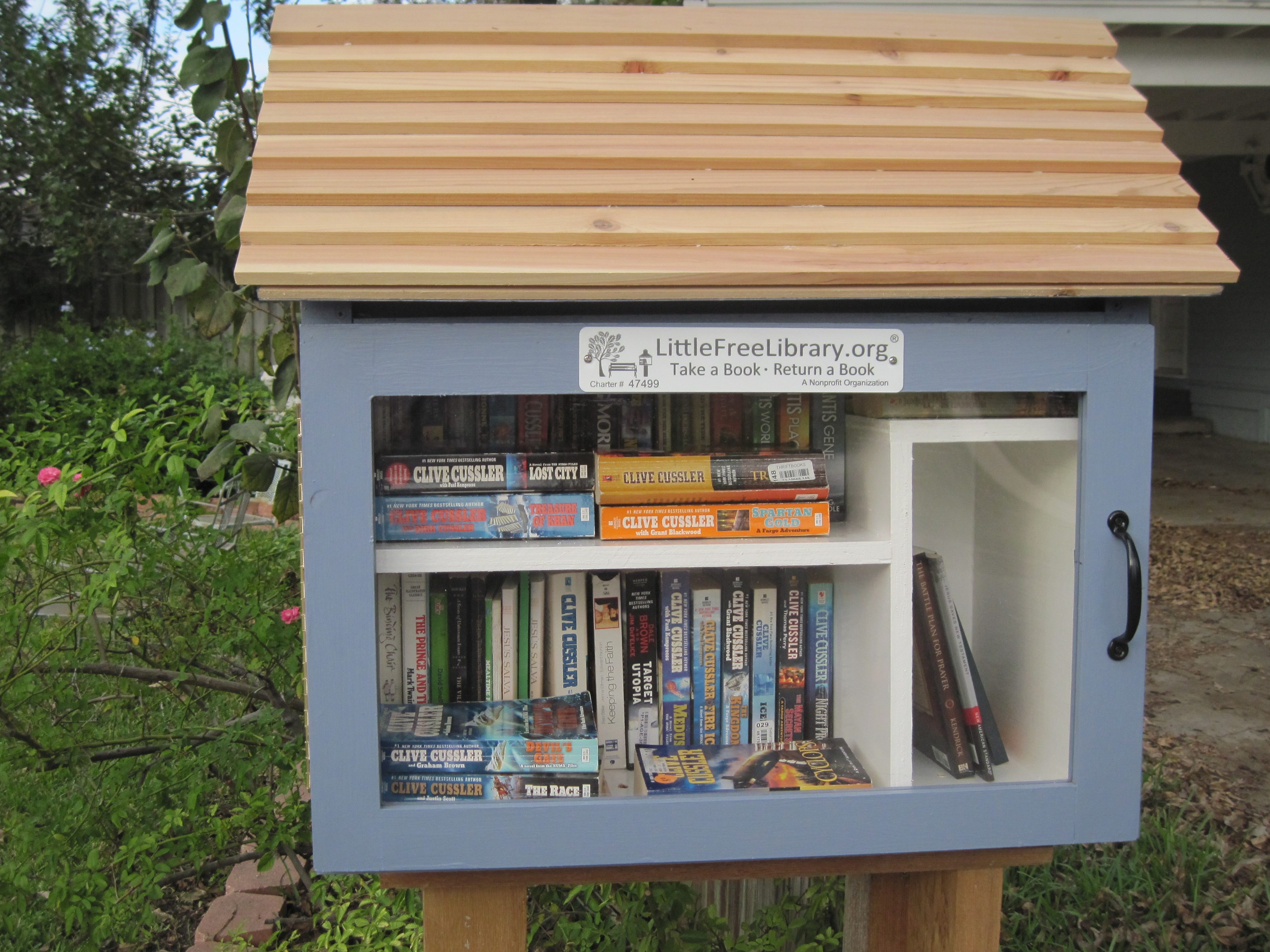
Yes, you read that right. You can get books for free thanks to two helpful organizations: Project Gutenberg and Little Free Library.
If you want to get free e-books, then Project Gutenberg is the answer for you! Founded in 1971 by Michael Hart (the inventor of e-books!), Project Gutenberg was created for the invention and distribution of e-books. With over 60,000 titles in their collection, you can download any e-book through your Kindle or any device.
If you’re not a fan of e-books and want to collect free printed books, then maybe it’s time you visit a Little Free Library! Little Free Library is a nonprofit organization with over 100,000 little libraries all over the world. The way they work is anyone who visits one can take or drop off books. It’s a library that is run by the community! So if you want to take an adventure and take a book home, you can search for Little Free Libraries near you here.
Accessing books these days is so easy compared to 20 years ago, so you can’t use that as an excuse for not reading. I hope you’ve learned something new from this article and will soon take advantage of one of the resources I mentioned. Next week, join me as I visit a Little Free Library here in Seguin built by TLU students and learn more about its creation from the professor who led project!

 Official Website of Texas Lutheran University's Student Media