
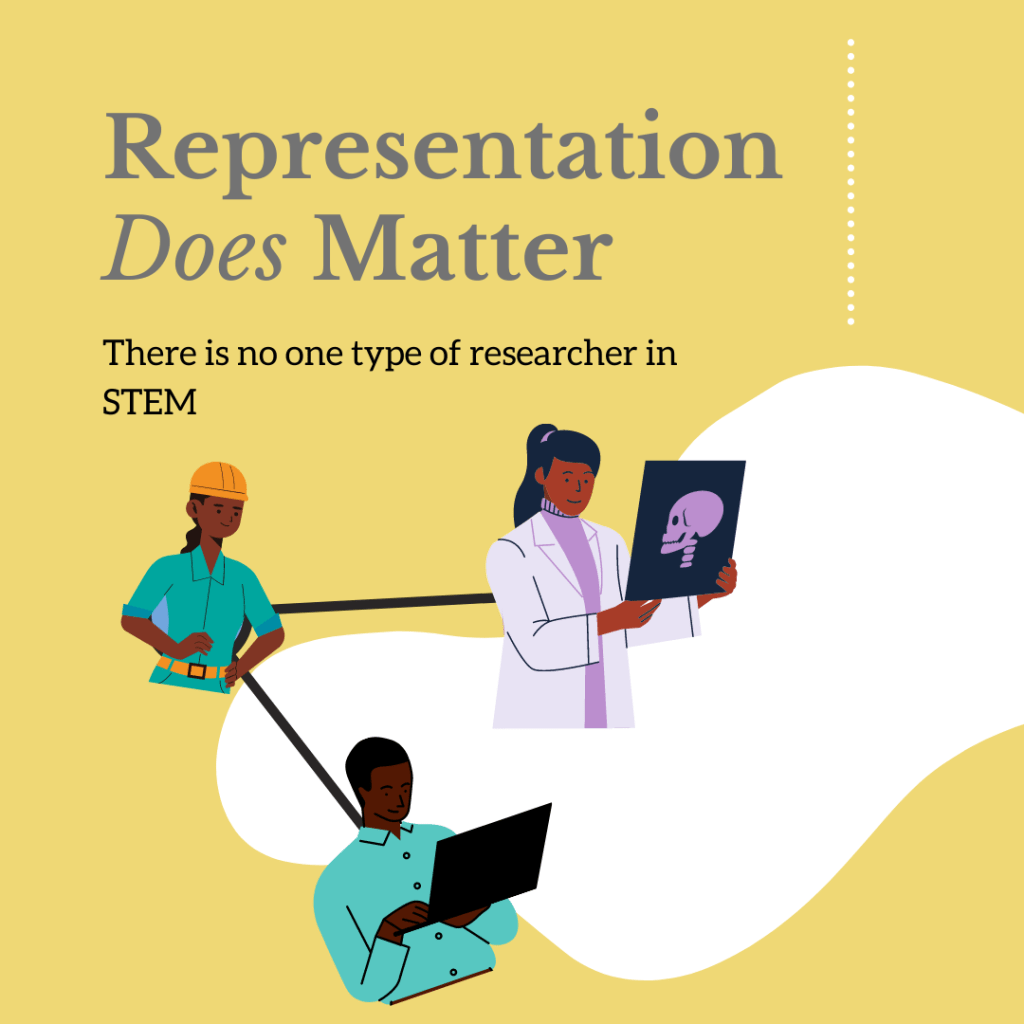
Today, diversity has become a term that is applied to nearly every aspect of our lives. From diversity festivals to organizations whose mission it is to promote representation, the word can pop up often, but the question remains: Is its purpose understood or just left as recognized to the average person? Some might even claim that its use is to spark attention for the sake of it being popular. However, when talking about diversity especially in STEM, innovation and exploration in these fields would quickly stagnate and slow without discussing the importance of the identities of researchers and participants who make up these careers.
In order to generate respectful conversations about diversity in STEM, it is best to understand the reasons for this topic and how one should prepare themselves for going into it. To start, while not everyone is specifically involved in STEM education, it might be difficult to understand how talking about diversity is relevant to a different situation. According to Penn State student, Saran Ashley-Douglas, her ability to connect with other students and mentors via student organizations and clubs on campus led her “to build relationships that she felt supported her endeavors like she had not experienced before.” Most of us can relate to a similar situation, where we didn’t know if our goals and ambitions were something that could be seen as a high priority to others.
This shows how diversity in STEM gives students the opportunity to think critically in their studies and makes them adaptable to understanding differences are common in regards to ethnicity, gender, sexual orientation, age, etc. It is also important to recognize that neurodiversity should be normalized too if we want to continue to grow as individuals and experts in the career field.
During the interview with STEM students, I asked them what they considered to be misconceptions about STEM education, especially when entering and being in the university setting. Bailey Plummer, who attends the University of Mary-Hardin Baylor, stated that “while she cannot control the assumptions that people place onto her, she understands that she can control her actions and look for resources that will further her knowledge in becoming an occupational therapist.” She said, “I feel supported on my campus by others who want to be OTs, (occupationals therapists), especially by instructors who had experience in therapy before teaching.” Not only does she feel connected by the students who share similarities through her career journey, but also through mentors who understand the struggles she faced from going through various experiences before.
When you have a good network to interact with or reach out to when you feel stuck, one can cover a broad spectrum of innovative understanding that funnels out to great performances. In STEM, we tend to rely on these professionals to produce new technologies and equipment that make our lives efficient and safe, devices that make learning available to all kinds of people, and medicines that ease the pain of someone suffering through an illness. Overall, these products are the result of creativity. Diversity matters because when there is a group that is far too similar to each other, the variation of questions and answers to solving problems become limited, not reflecting the knowledge of the many types of people these innovations will be made for.
Now understanding how crucial it is to bring up these discussions of diversity in STEM, we will be able to examine next week how students are able to see themselves represented on campus in reality. I want to encourage everyone to have these conversations about diversity in careers, STEM, humanities, and all other various areas of expertise. Your voice does matter.

 Official Website of Texas Lutheran University's Student Media